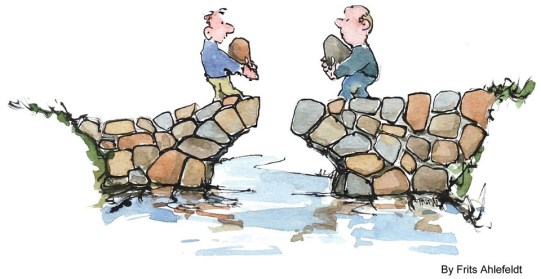
 The 2016 election season has been one of the most unpredictable rollercoasters in the history of our nation’s politics. However, on November 8, 2016, the craziness comes to an abrupt halt as voters head to the polls and finalize their decisions about who will lead our country. America, a beacon of hope for millions across the globe, is going to be placed on two radically different tracks depending on the outcome of the presidential election. However, as America decides who will lead, we must ask the question: will the rest follow?
The spirit of debate and discussion begets important and radical change, but do we see compromise stemming from political debate and discussion? An example of such progress in the affirmative answer of the aforementioned question comes from the campaign of Bernie Sanders. Though unsuccessful at achieving the nomination for the Democratic party, his pursuits, vision, ideas and energy were not haphazardly wasted. Former secretary of State Hillary Clinton and the rest of the Democratic party have made strides to embrace pieces of Sanders’ campaign platform. It is because of the extreme-leftward pull of the Sanders campaign that Clinton rehashed of her collegiate education plan. To many, her reconciliation did not go far enough; however, we must not deceive ourselves in her attempts to appease the radical left.
On the red side of the ticket, the Trump campaign has stayed relatively divisive in its unique and unprecedented course. During most primary campaigns, candidates fade more toward the radical end of their party and then snap back toward the political center in hopes of swaying the undecided voters. Examples of this can be seen through Trump reneging on his all-out Muslim Ban by calling for a more moderate and temperate approach. Further evidence can be found in Trump’s warming tone regarding immigration. However, he has stayed firm on the call of a wall, on the disgust toward our current international trade agreements and on the call for Clinton to be prosecuted. Contrary to the Democrats, Trump’s former primary competitors seemingly did not bear much influence on his campaign or the party platform.
Though we focus on how each candidate is to appease his/her own party, we must also look at the bigger picture: how will the candidates fare in a divided America? How will they reconcile extreme differences?
Just this past week, Trump stated in a speech in Gettysburg, PA that he hoped to “heal the divisions” that currently were rampant throughout the American people. His speech was obviously influenced by Lincoln, but based on prior speeches vehemently attacking the Democrats (and Republicans), his words were a mere hollow shell of realism. Looking toward the Clinton campaign, I can’t fathom how her presidency will pacify those calling for her indictment; nor does it seem likely to warm relations with a group of people she deemed “deplorables.” Is America unable to put up a true unifying candidate? Are we unable to find some type of solitude in the celebration and leveraging of our distinct differences?
Turning away from the Presidency, I want to make the observation that the word “compromise” has been seemingly removed from the dictionaries handed out to politicians. We see political candidates only partially compromise within their own party, and speak of bipartisan compromises as often as people call for world peace (neither options are in our future). The compromises in politics never seem to be true compromises in the sense of seeking a win-win opportunity, but rather for one side of the political spectrum to not be overtly hurt by the opposition.
We cannot continue to pretend politics is a zero-sum game with the goal of bolstering political parties; rather, we must seek to find more adequate solutions to help our nation.
How are the political candidates going to react to the need to unite a nation? Granted, neither candidate will be able to appease the extreme right or left, but will the moderate right and moderate left be happy? Will we even recognize compromises if they occurred or would they be shrouded in some political rhetoric that defames the opposition?
I dream of the day when a presidential candidate chooses a moderate from the opposing party (assuming two party system) to run in a true attempt to unite our country. However, I fear my dreams are simply dreams and thus, they are the idealistic folly of a young writer.
When we wake up on November 9th, we will rise from our slumber in a world with a winner and a loser (presumably). Regardless of the outcome, it is with that political leadership that we will remain for the next four years. We will need to find a way to compromise, concede, negotiate, and presumably appease, all ideological beliefs from the religious to the political. That challenge will be insurmountable; however, we must elect leaders who will dedicate their political tenure to unite this “one nation, under God, with liberty and justice for all,” or we will forever be caught in this pathetic and hurtful spiral of a vicious two party system.
 thereisnopeak.com
Ben- I’ve been spending a lot of time thinking about the post-election America as well. Here’s my biological / therapeutic lens: on a neurological level, our brains can get addicted to conflict and anger. Upon watching the news for the last year, adrenaline has been pulsing through all of our veins! Adrenaline, and dopamine when we feel rewarded for being “right” when the “other” candiadate falters. What’s going to happen when the election ends, you ask? Something new must satisfy that addiction. In a perfect world, we would get off at the thought of compromising with one another, through dialogue, facts, and productivity. But then where’s the excitement?
I would argue that on a basic level human motivation revolves around our addictions and pleasures. The optimistic side of me speculates that eventually this high will wear off. The pessimistic side understands that there is always more to be fabricated.
LikeLike